ANYWHERE REAL ESTATE INC.
AT-A-GLANCE
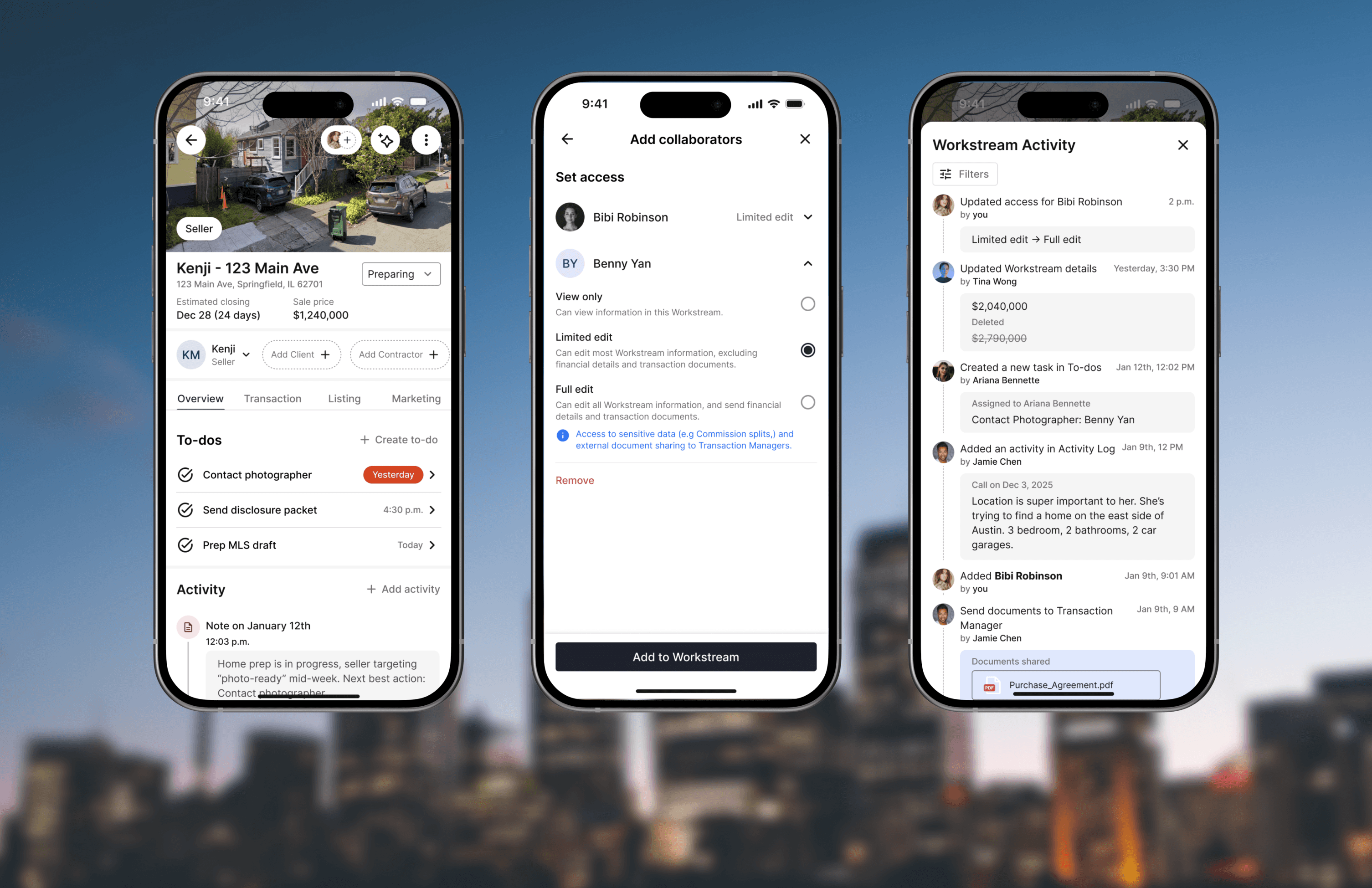
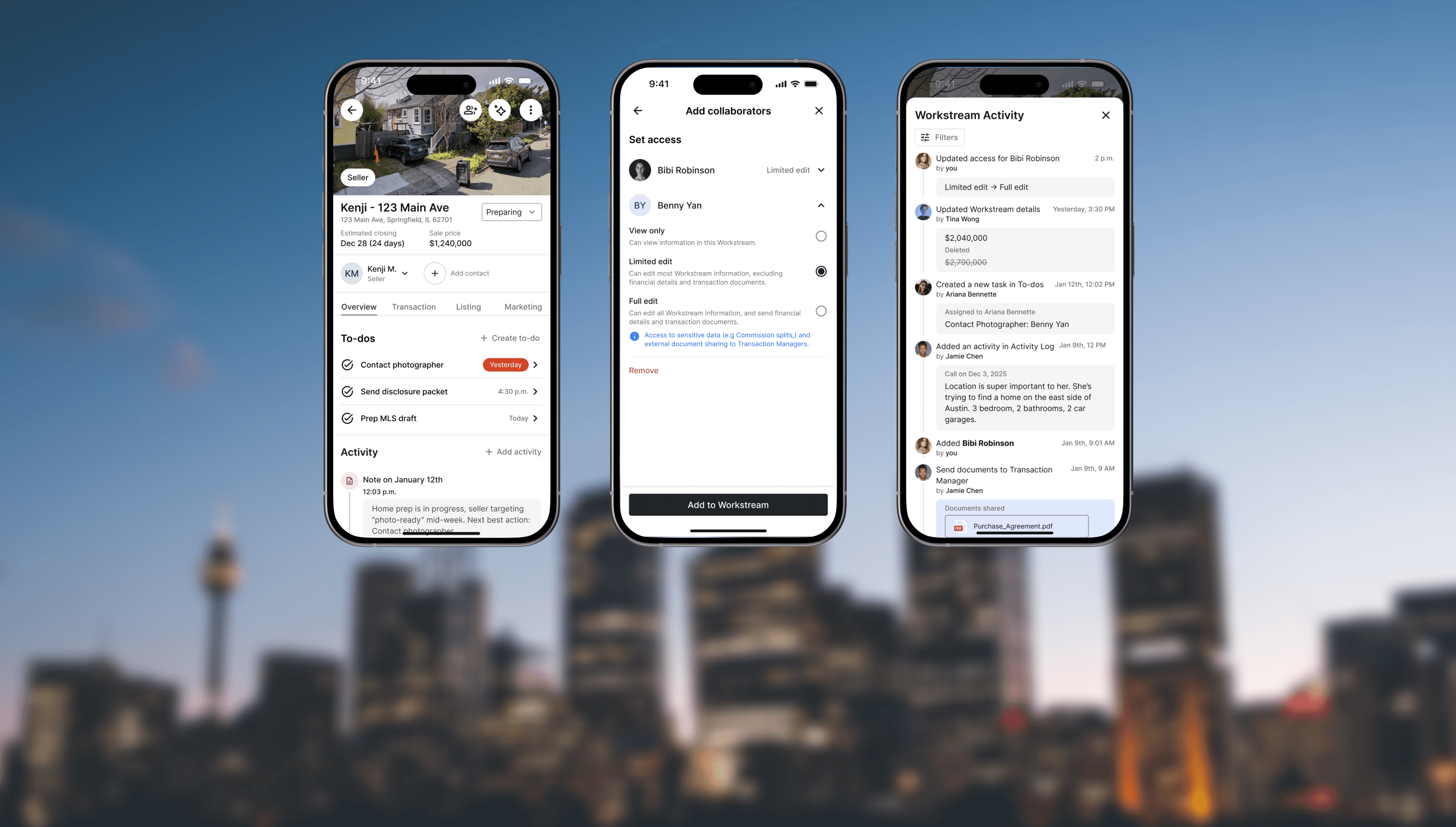
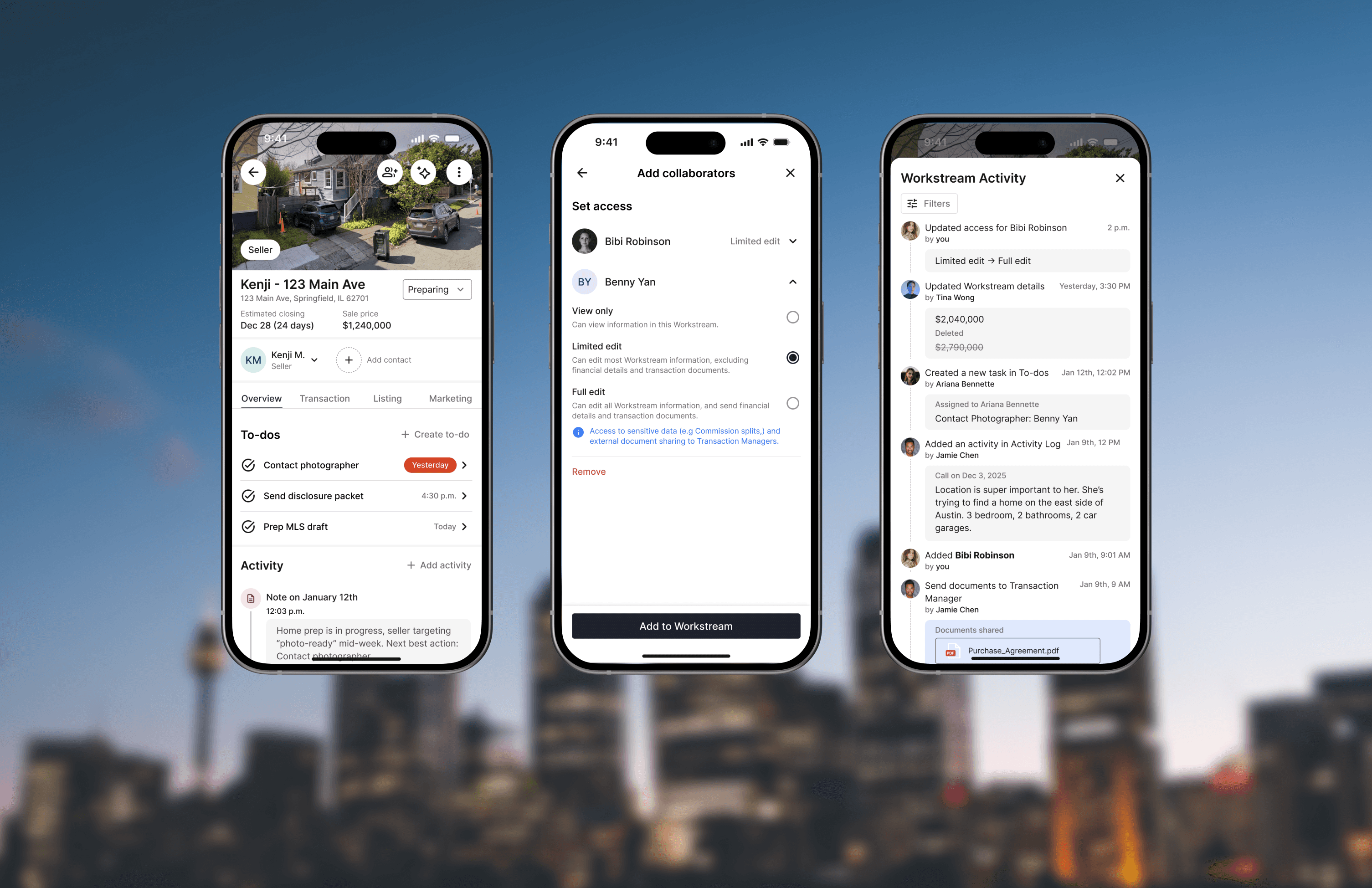
At Anywhere RE, I led 0→1 design and strategy of Team Collaboration for Agent Workplace—creating shared Project spaces, permission roles, and ownership structures that enable teams to collaborate at scale while maintaining trust and security.
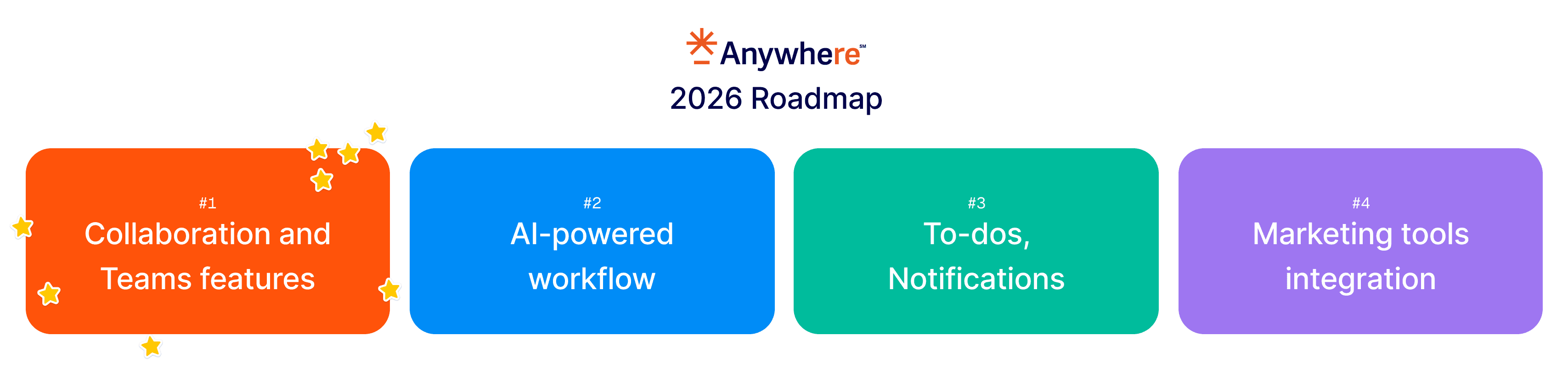
My pitch for "Collaboration" initiative got approved to be prioritized as 1 in 4 of 2026 roadmap focus.
ROLE & TEAM
Lead Product Designer, working with 1 UXR, 1 PM, 2 Engineers, 2 System Architects
SKILLS
Systems thinking
UX Strategy
Information Architecture
Interaction Design
TIMELINE
Oct 2025 - Jan 2026
USER PROBLEM
Agent Workplace (AW) is a productivity enterprise tool used by real estate agents across Anywhere 7 brokerages to manage leads, transactions, and their daily workflows. While 30% agents work in teams, AW was built for solo workflows, creating silos, duplicated work, and communication gaps.
😵💫
'“I spend a lot of mental energy keeping track of who’s doing what—and updates change before I can relay them”
lead agent
Jessie
😮💨
“I have to manually track and update my own project space. Managing 10 leads at once, things easily fall out of sync.”
agent
Sam
FINAL SOLUTIONS
1/
A single, collaborative workspace replace siloed workflows to reduce duplicated work and manual handoffs.
2/
Action-based permissions reflect real team structures, allowing collaborators to work efficiently while safeguarding sensitive financial and transaction data.
3/
Audit logs show who took what action and when, giving team leads visibility while maintaining trust without blocking team autonomy.
BEING AN AI-NATIVE DESIGNER
In a fast-paced environment where we ship and iterate daily, speed becomes a competitive advantage. I integrated AI into my design workflow not to replace strategic thinking, but to accelerate execution.
Gemini to draft PRDs and refine system logic for cross-functional alignment
Claude Code to brainstorm ideas with PMs and Engineers, moving concepts into clickable prototypes
Dovetail AI to quickly browser through our research database and validate ideas against existing user insights
Ballpark to run lightweight user tests. It has an amazing AI tool that cuts and compiles videos to synthesize research insights.

This is a living toolkit that I continuously expand on
INITIAL BRIEF
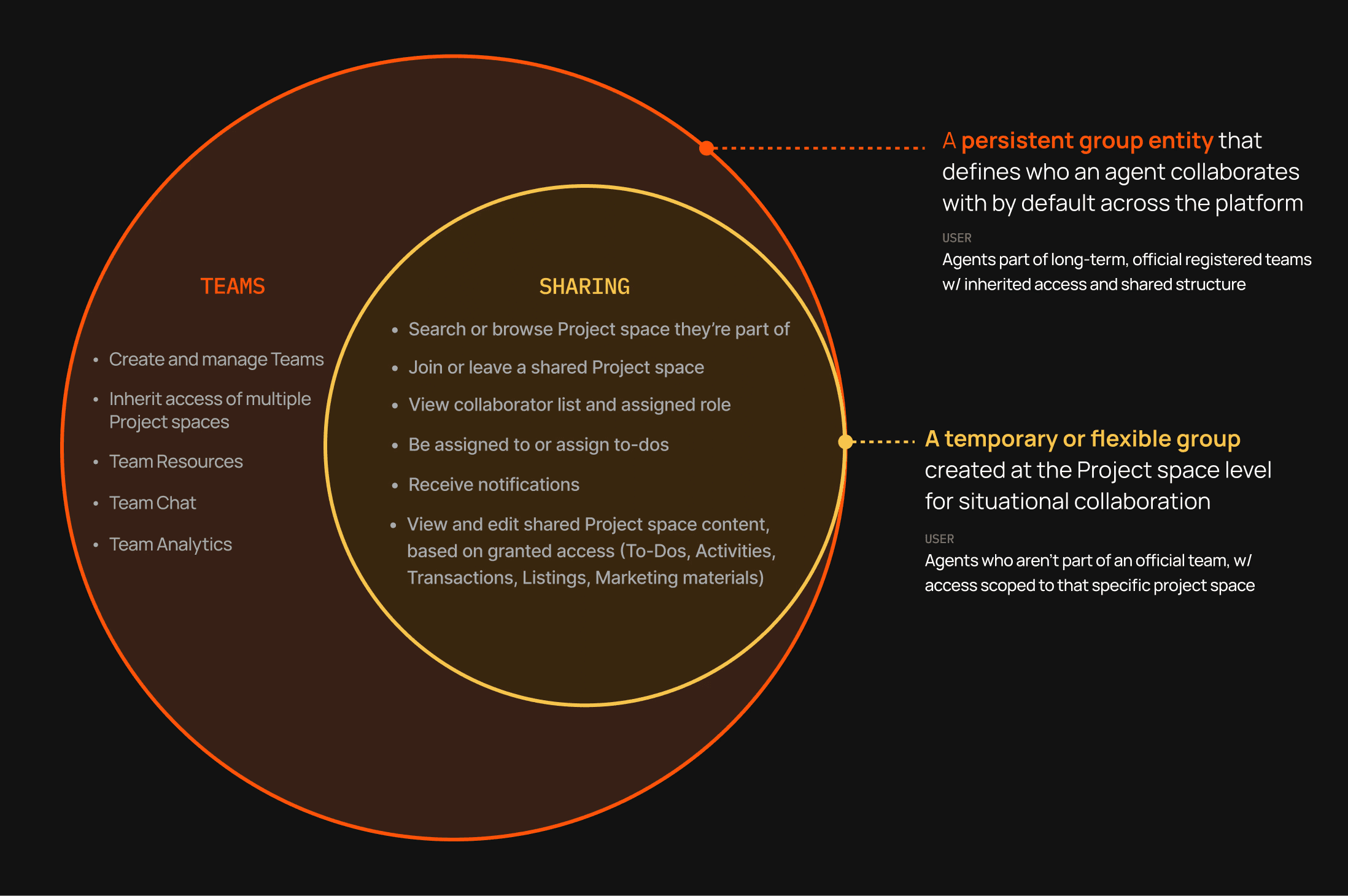
Initial prototype revealed 2 core business needs:
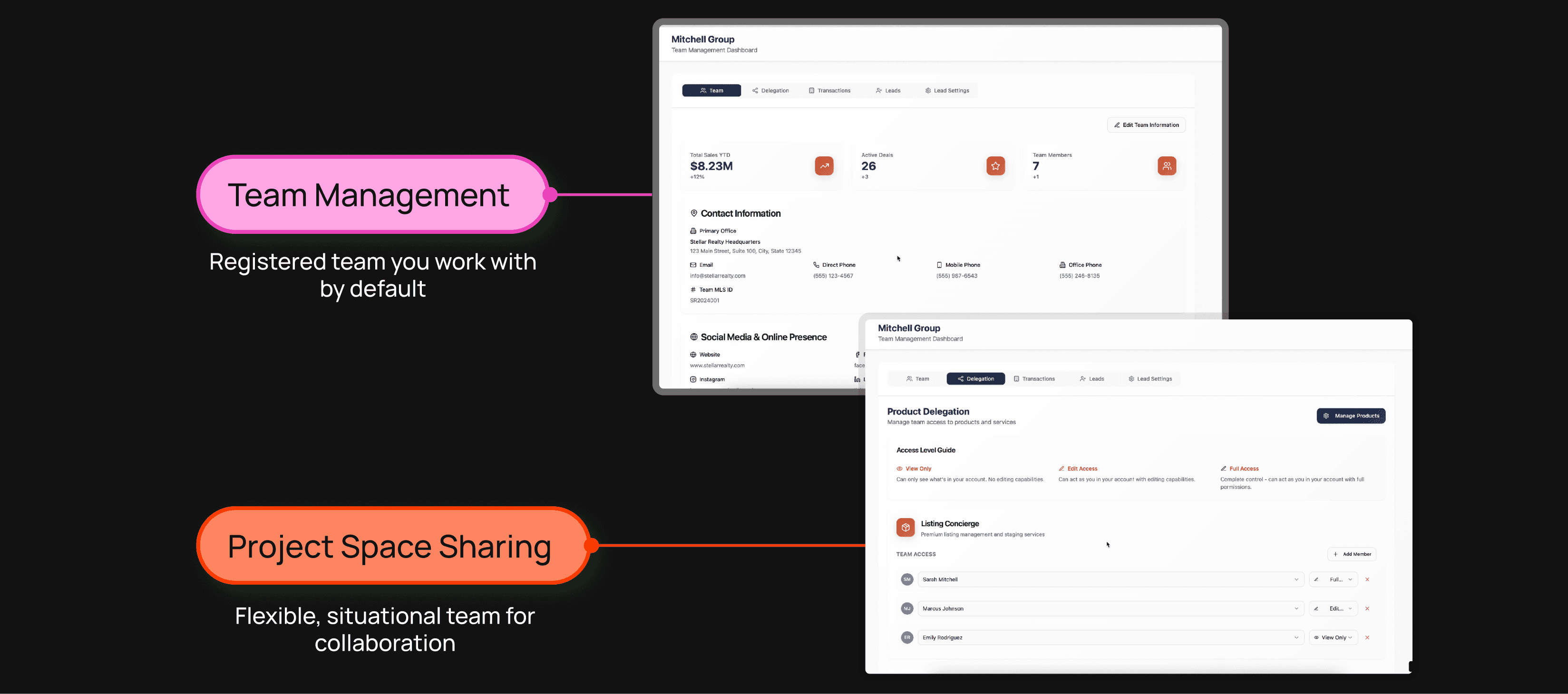
- Team Management (team information, managing collaborators, team sales analytics)
- Project Space sharing (adding, editing access, and removing collaborators, assigning tasks)
A combined experience overwhelmed and disrupted users of their day-to-day work 😵💫
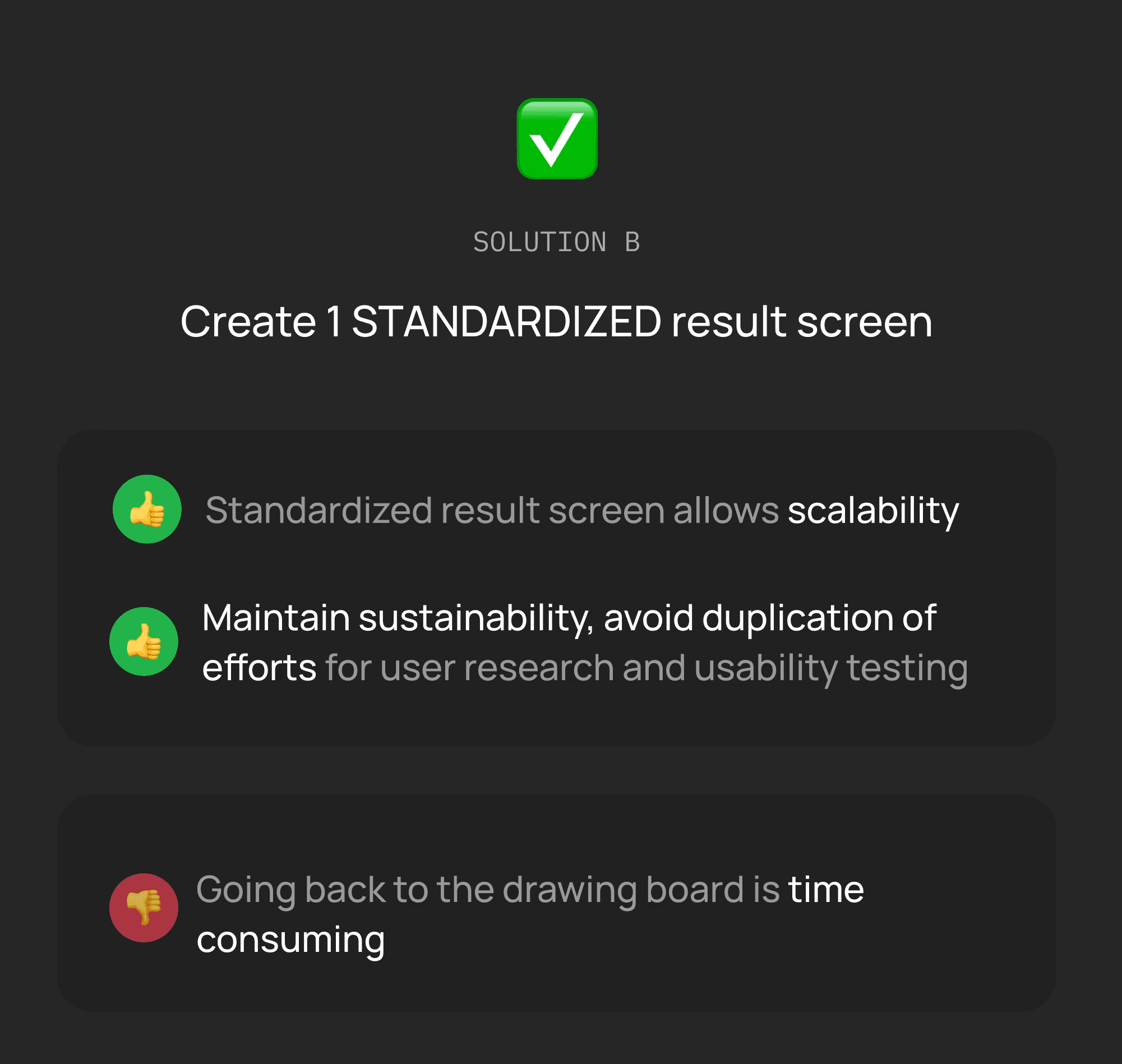
This vibecode is a good start for vision. I decide to further breakdown these features to make sure I'm solving the right problem for the right user.
product thinking - THE FOUNDATION
Though both related to collaboration, "Team management" and "Project space sharing" serve 2 different users
so, WHY does THIS MATTER?
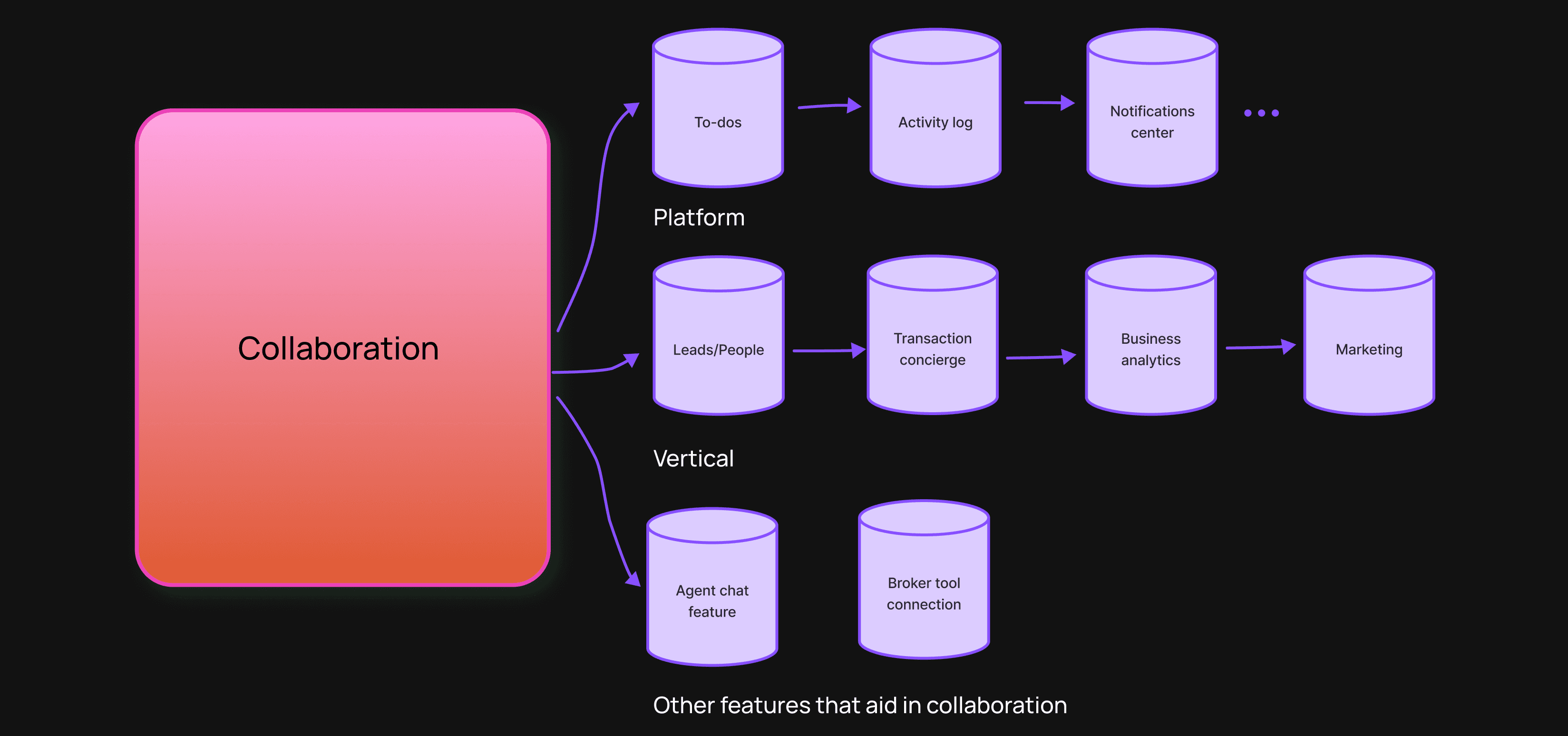
It became evident "Collaborations" is a bigger initiative than a quick feature. Partnering with, PM, we align on priorities, and roadmap it as a core 2026 initiative that I continue to drive in close collaboration with Engineering and System Architecture.
REDEFINE THE BRIEF
🤝
GOAL #1
Sharing Project space with ease
🔐
GOAL #2
Security for sensitive data
🔍
GOAL #3
Transparency for access & activity
product thinking - THE LOGIC
Teams are small (2-10 collaborators)
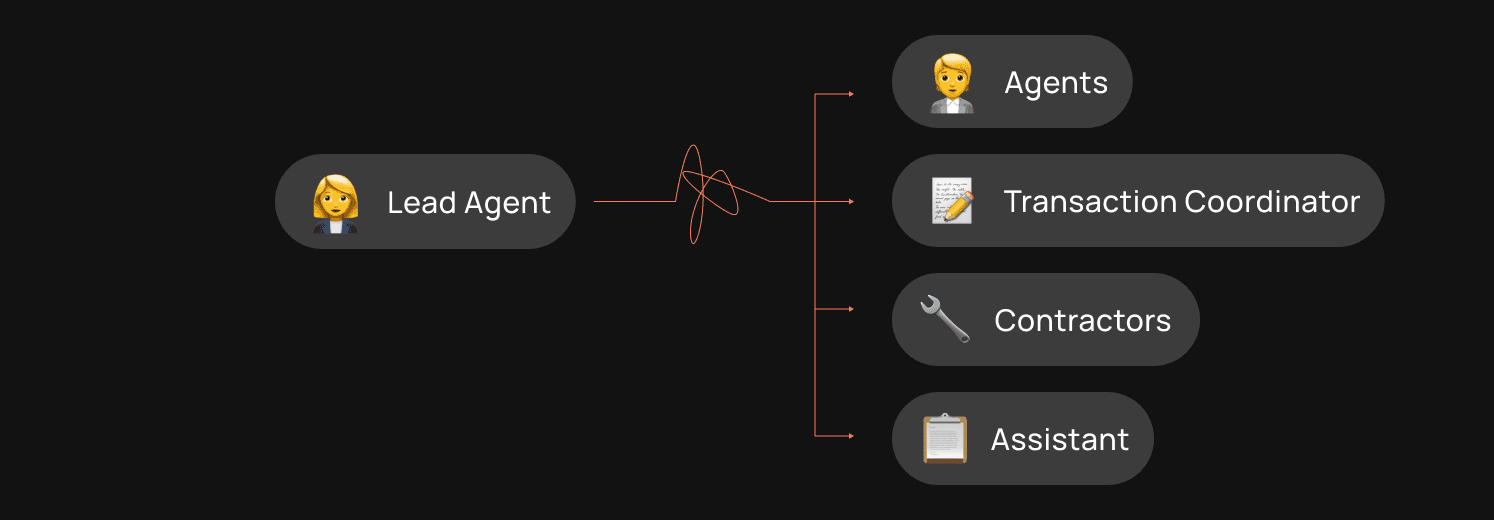
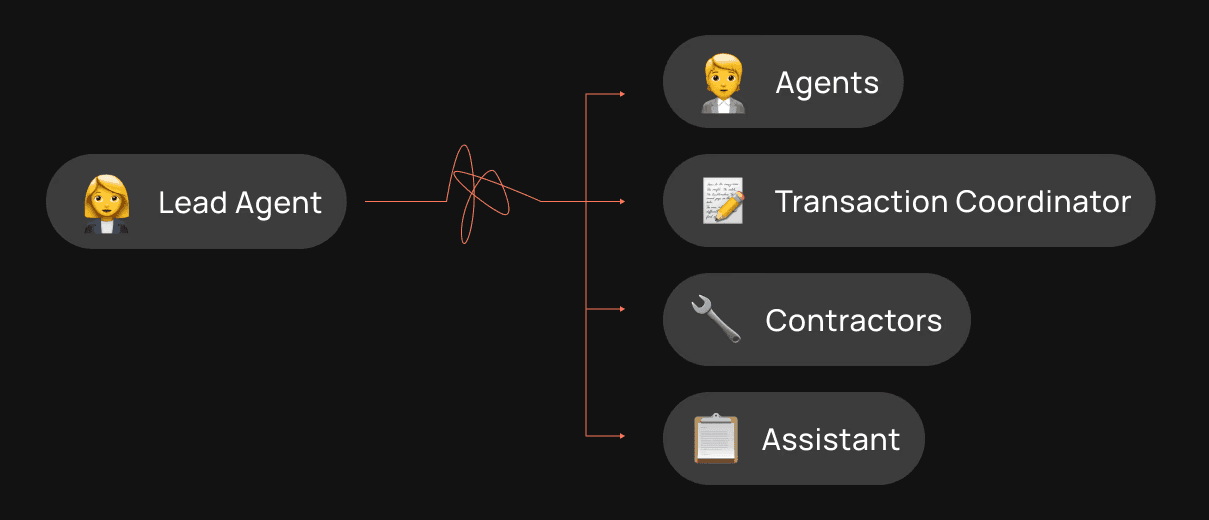
Roles combination vary significantly across teams: Agents, Transaction Coordinators, and External Contractors…
Leads are selective about what they share to other agents:
✅ Operational context
🚫 Transaction actions & commission splits info
Based on these insights, I designed 4 permission levels that reflect real team behavior, protect sensitive actions, and support collaboration with accountability.
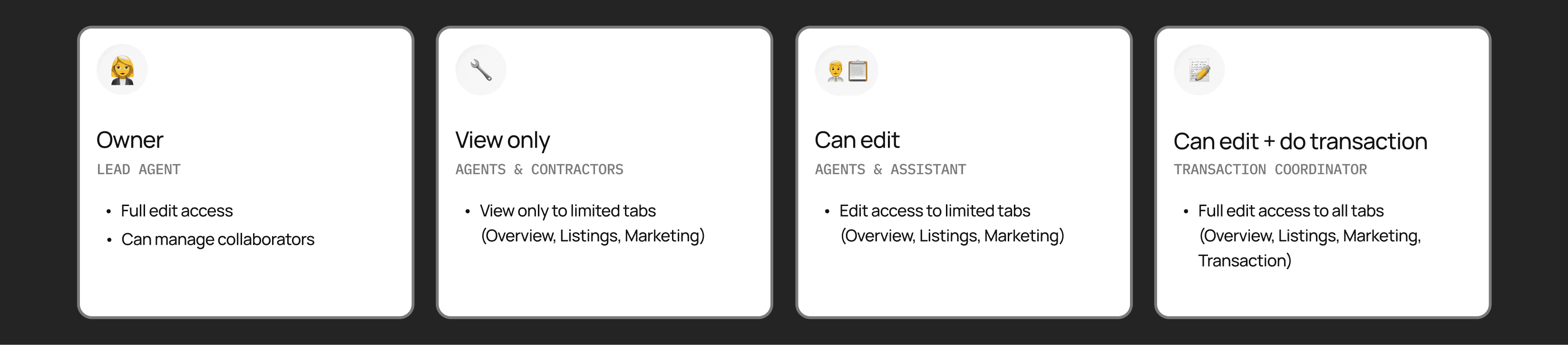
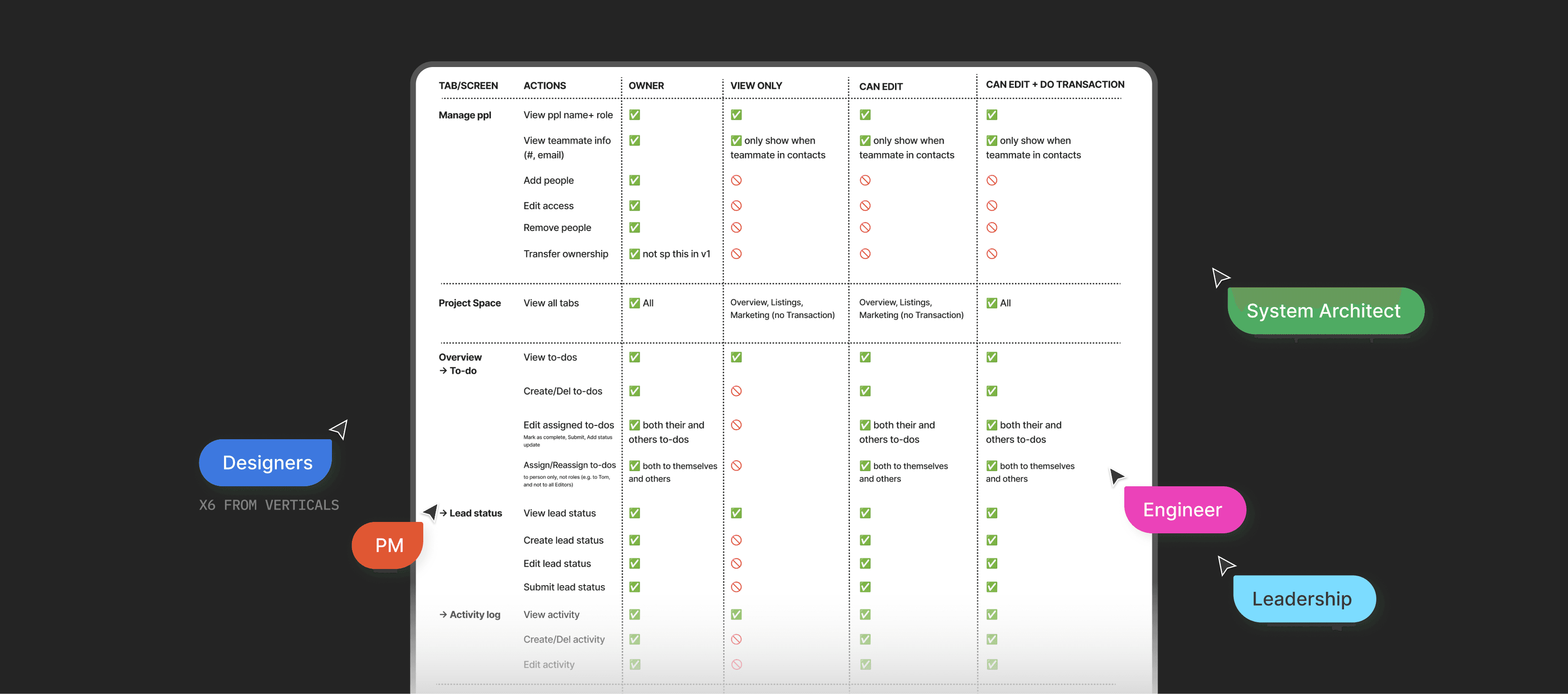
As the designer on platform, I also accounted for how permissions would cascade down to vertical actions (To-dos, Activities log, Milestones, Marketing, Transactions…) I aligned with 6 other designers from verticals, PM, Engineer, System Architect and Leadership to make sure the logic is consistent across workflows.
change of SECURITY REQUIREMENT FROM BUSINESS
This policy shift redefined user model. They existed only as saved contacts, similar to clients.
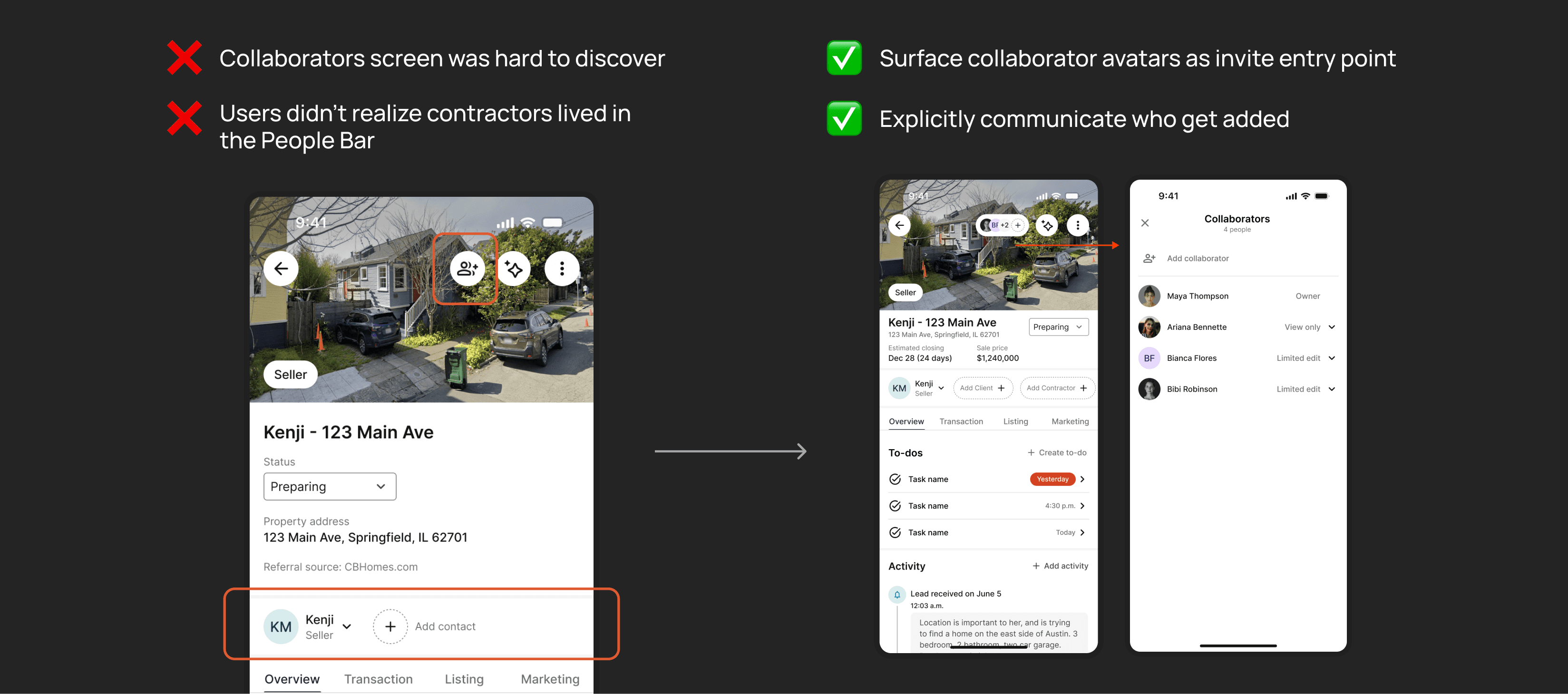
Rethinking the entry point
People bar was originally designed to store all people-related data. But due to difference in purposes, I decide to separate contacts and collaborators
Collaborators → dedicated collaborator list, managing people who have access to Project space.
People Bar → surface quick contacts (clients + contractors)
design decisions
I facilitated cross-team knowledge-sharing sessions to align on insights, validate technical feasibility, stress-test the permission logic, and ensure the solution met business goals. Below are some highlights of key iterations:
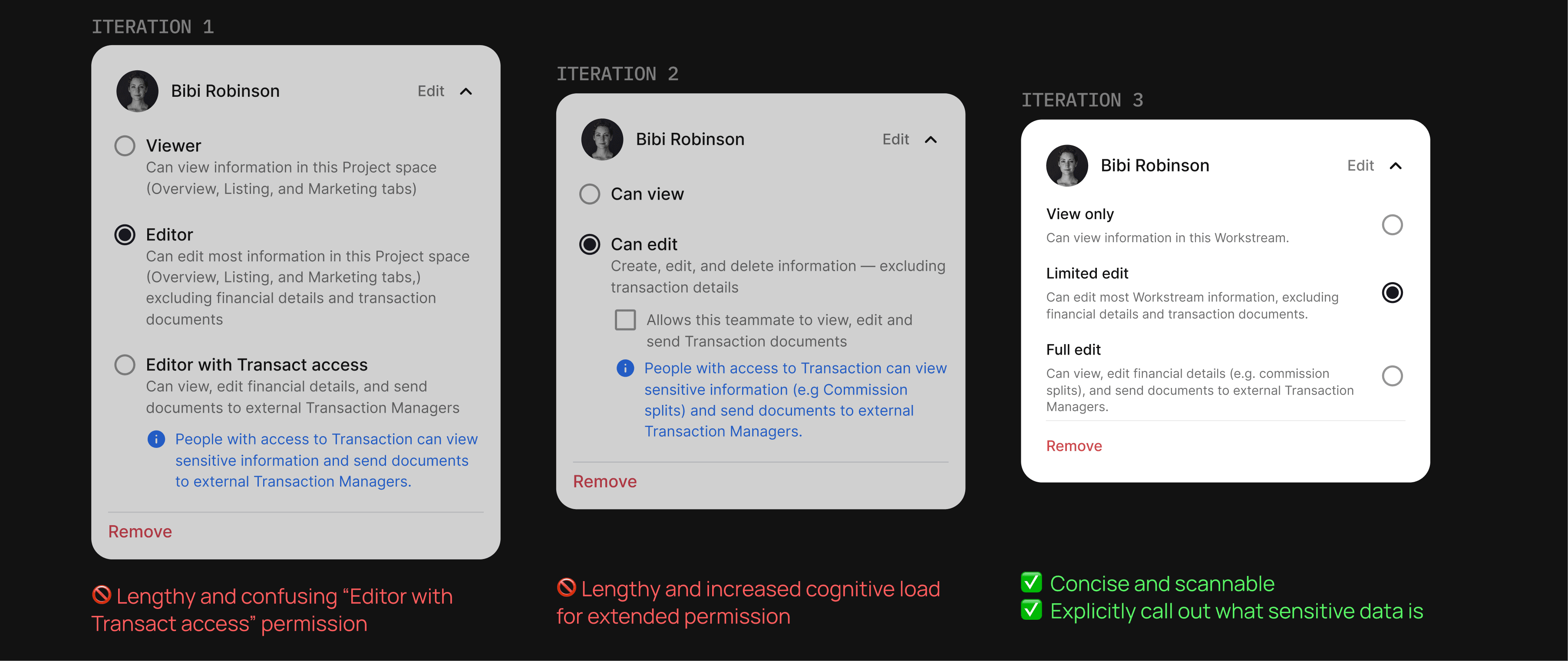
1/ Reducing risk in defining permission setting at a glance
💡
Clear labels highlighted sensitive access like commission splits instead of generic descriptions
💡
"Limited edit" as the default matched most collaborators’ needs and prevented overpermissioning
2/ Visibility enables trust and accountability
"My teammates handle most of daily work. I want visibility without slowing them down.”
Users
You've reached the end… how about another story?
ACTIVISION BLIZZARD / 2024